Pearson Edexcel · A-Level · Economics B
Course version: 9EB0 · Version from Sept 2015
Accounting ratios: Profit for the year (net profit) margin: (Profit for…
Full specification wording
Appendix 4: Accounting ratios: Profit for the year (net profit) margin: (Profit for the year (net profit) / Revenue) x 100%
The profit for the year (net profit) margin reveals the percentage of revenue remaining after all expenses, including cost of sales, operating expenses, interest, and taxation, have been deducted.
Checked against the Pearson Edexcel 9EB0 specification (opens in a new tab) on .
- Point 3 of 3
Study notes
From the checked teaching notes for this specification point.
The idea
The profit for the year (net profit) margin reveals the percentage of revenue remaining after all expenses, including cost of sales, operating expenses, interest, and taxation, have been deducted. The formula is: (Profit for the year / Revenue) x 100%. This ratio provides a comprehensive view of a company's overall profitability and its ability to convert sales into actual profit for shareholders. For instance, if a company has a revenue of £800,000 and a profit for the year of £64,000, the margin is (£64,000 / £800,000) x 100% = 8%. Comparing this margin over time helps assess whether a business is successfully managing its total costs relative to its sales growth.
What earns the marks
- Locate the profit for the year (net profit) and revenue figures within a statement of comprehensive income.
- Apply the formula: (Profit for the year / Revenue) x 100% using the extracted data.
- Compute the final value as a percentage, ensuring accurate division and multiplication.
- Analyse the calculated margin to evaluate the overall profitability and financial health of the enterprise.
Common mistakes and how to put them right
Using operating profit instead of profit for the year in the calculation.
Put it right: Ensure all costs, including interest and tax, have been deducted to find the profit for the year before applying the formula.
Expressing the final answer as a decimal or a currency value rather than a percentage.
Put it right: Multiply the result of the division by 100 and append the '%' symbol to denote a margin.
Selecting the wrong revenue figure, such as net assets, for the denominator.
Put it right: Use the total sales revenue generated during the period as the denominator.
Exam tips
- Clearly state the formula (Profit for the year / Revenue) x 100% in your working to demonstrate your method, even if the final calculation is incorrect.
- Pay close attention to the terminology used in the data; 'profit for the year' is synonymous with 'net profit' in older accounting formats.
- When evaluating profitability, consider how changes in interest rates or taxation might impact the profit for the year margin independently of operational performance.
Try the lesson
The start of the Appendix 4: Accounting ratios: Profit for the year (net profit) margin: (Profit for the year (net profit) / Revenue) x 100% lesson, made from checked teaching notes for this specification point.
Have a go first
A manufacturer generates revenue of £400,000, operating profit of £80,000, and profit for the year of £60,000. What is the profit for the year margin?
Listen
The profit for the year (net profit) margin reveals the percentage of revenue remaining after all expenses, including cost of sales, operating expenses, interest, and taxation, have been deducted. The formula is: (Profit for the year / Revenue) x 100%. This ratio provides a comprehensive view of a company's overall profitability and its ability to convert sales into actual profit for shareholders. For instance, if a company has a revenue of £800,000 and a profit for the year of £64,000, the margin is (£64,000 / £800,000) x 100% = 8%. Comparing this margin over time helps assess whether a business is successfully managing its total costs relative to its sales growth. A strong answer earns marks for these points. Locate the profit for the year (net profit) and revenue figures within a statement of comprehensive income. Apply the formula: (Profit for the year / Revenue) x 100% using the extracted data. Compute the final value as a percentage, ensuring accurate division and multiplication. Analyse the calculated margin to evaluate the overall profitability and financial health of the enterprise. A common slip: Using operating profit instead of profit for the year in the calculation. Instead, Ensure all costs, including interest and tax, have been deducted to find the profit for the year before applying the formula. Exam tip: Clearly state the formula (Profit for the year / Revenue) x 100% in your working to demonstrate your method, even if the final calculation is incorrect.
See it
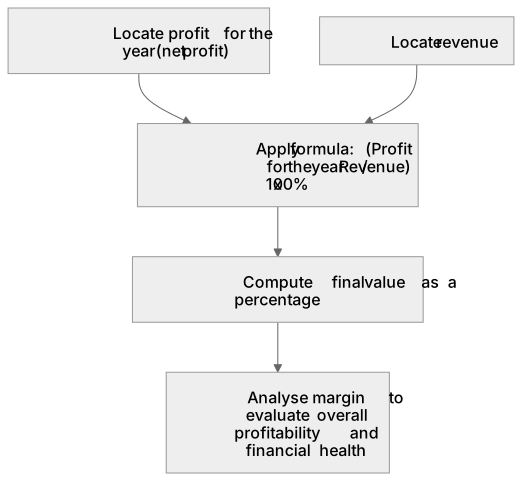
Label the diagram
Some boxes have lost their names. Pick the right name for each number.
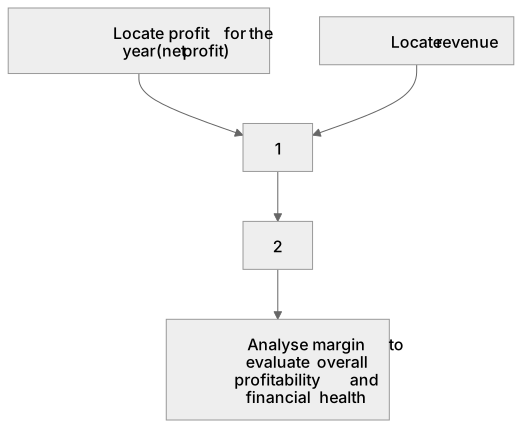
1Box 1
2Box 2
There is more to this lesson
The full lesson goes on to check your understanding and help you earn the marks. Create a free account to carry on, with your progress saved.
A week of Premium from your first lesson · Then the free plan continues · No card, no charge
Test your understanding of Appendix 4: Accounting ratios: Profit for the year (net profit) margin: (Profit for the year (net profit) / Revenue) x 100%
Active recall beats re-reading. Take an instant quiz now to test what you’ve learned and lock it into long-term memory.
A week of Premium from your first lesson · Then the free plan continues · No card, no charge